What does it actually take to make money trading meme coins?
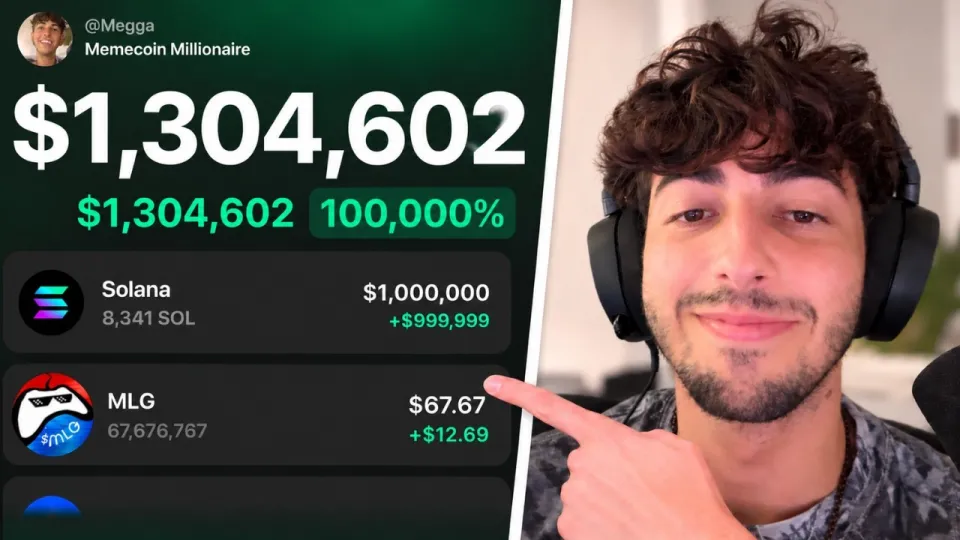
Video: How I Made $1,000,000 Trading Memecoins (FULL BREAKDOWN)
You can order the same kind of articles for your own video to boost it on YouTube and Google. Just message the Telegram bot @sat_sit_bot. The bot writes and publishes the articles itself (with your YouTube video embedded) on popular topical websites (no ads). Try it free: 50 articles on us.
· based on the channel Megga
Meme coin trading is a high-risk, high-attention game in which profits come from being early into new token launches, sizing positions so a single loss cannot end you, and treating drawdowns as a routine part of the process rather than a verdict on your skill. The full breakdown of how Megga turned meme coin trading into a seven-figure result is built on exactly that: thousands of hours in the "trenches", a repeatable entry process and strict emotional control. A free course covering the same framework is available through this Whop checkout link, and execution runs through a low-fee terminal.
What a meme coin actually is and why the returns look so large
A meme coin is a token whose value rests almost entirely on community attention, narrative and liquidity rather than on cash flow or product revenue. That structure explains both sides of the story: a token can multiply in hours when a narrative catches, and it can go to zero just as fast when attention rotates away. Because supply is usually concentrated in a small number of early wallets, the price chart is less a measure of value and more a map of who entered when.
The seven-figure result in the Megga breakdown does not come from one lucky ticket. It comes from a volume business: many small and medium entries, a minority of which run far enough to pay for everything else. Understanding that distribution is the difference between treating meme coins as a lottery and treating them as a trading edge.
The mechanics behind a $1,000,000 meme coin result
The path to a seven-figure PnL in meme coins is a numbers game where position sizing and exit discipline matter more than any single pick. Three things do most of the work:
- Early entry. Being in a new launch within the first minutes, before the chart is legible to the crowd, is where the asymmetric part of the return lives. That requires monitoring tools, alert lists and a routine for scanning new pairs continuously.
- Small initial risk. Positions are sized so that a total loss is survivable. The winners are allowed to run; the losers are cut without negotiation.
- Scaling out. Profits are taken in tranches as the token gains attention, rather than held for an imaginary final top.
The uncomfortable corollary is that the money funding those returns comes from later buyers. Every profitable exit has a counterparty who bought higher. That is not a moral footnote — it is the structural reason why late entries lose, and why the strategy only works for people who are consistently early.
Why 9 to 12 hours at the screen is the real entry barrier
The most common question about this style of trading is what someone actually does during a 9-to-12-hour session, and the honest answer is mostly waiting, filtering and documenting. A working day in the trenches looks like this:
- Scanning new launches and tracking which narratives are gaining traction across social feeds.
- Reading on-chain flow: who is buying, whether liquidity is locked, whether early wallets are already distributing.
- Managing open positions, taking partial profits and cutting positions that break the thesis.
- Reviewing the day's trades afterwards to separate good decisions from good outcomes.
Screen time is not the same as productivity. The traders who last are the ones who convert hours into a repeatable checklist — a fixed set of conditions a token must meet before any capital goes in. Without that checklist, long sessions simply produce more impulsive trades.
The risks nobody puts in the highlight reel
Meme coin trading carries risks that are structural, not incidental, and they deserve to be listed plainly. Rug pulls, where deployers drain liquidity, phishing attacks that empty wallets, and tokens that simply never recover are all normal events in this market. A trader who hit a large multiple and then lost a wallet to a phishing link describes a pattern that is extremely common: the gains arrive first, the operational mistakes arrive later.
Drawdowns are equally normal. Even successful traders spend long stretches underwater, and the psychological damage of a losing streak is usually more expensive than the money lost. The realistic risk controls are boring: separate wallets for trading and storage, never connect a main wallet to unknown sites, cap the size of any single bet, and stop trading after a defined daily loss. Anyone who cannot absorb a total loss on a position should not take that position.
How to start without becoming exit liquidity
Starting in meme coins safely means starting small and treating the first months as paid education rather than income. A sensible sequence:
- Learn the mechanics on a tiny bankroll — how launches work, how liquidity is added and removed, how slippage and fees eat into small trades.
- Build a monitoring setup so you see new pairs early instead of hearing about them after the move.
- Write your entry and exit rules down before trading, and follow them for at least a few dozen trades.
- Track every trade with entry, exit and reasoning, so you can tell whether an edge actually exists.
- Only increase size after a documented sample of profitable decisions, not after one big win.
The realistic expectation is that most beginners lose. The people who make it through are those who treat losses as data and keep showing up, rather than those who chase the next runner after it has already doubled.
Questions traders keep asking about meme coin results
Two recurring doubts deserve direct answers. First, whether a seven-figure result is repeatable: it is repeatable as a process, not as a number — the same discipline applied to a smaller bankroll produces proportionally smaller results, and the timeline is unpredictable. Second, whether you can do this with a job: yes, but only by narrowing scope, trading fewer setups and focusing on one or two time windows per day instead of trying to cover the whole session.
A third common concern is verification — how to tell a genuine narrative from a manufactured one. There is no shortcut here: check who holds the supply, whether liquidity is locked, how old the wallets are and whether the community is organic. Technical intuition about which tokens will run is built from hundreds of failed and successful examples, not from a single indicator.
Useful links
- Free course and checkout: https://whop.com/checkout/plan_Jfp7BxTu8pWGu/?session=chs_HL1L0oQ9QcTEa3
- Low-fee trading platform: https://trade.padre.gg/rk/megga
- Twitch: http://www.twitch.tv/megga
- TikTok: https://www.tiktok.com/@meggafaze
- Twitter: https://twitter.com/megga
Bottom line
Meme coin trading can produce outsized returns, but the mechanism is unglamorous: early entries, small survivable bets, partial exits and a tolerance for long losing stretches. The $1,000,000 breakdown published by the Megga channel is valuable less as a promise and more as a map of what the work looks like — long sessions, constant filtering and strict risk control. Anyone entering this market should assume most participants lose and size accordingly. If you want the same framework explained step by step, start with the free course via Whop before risking real capital.
Key takeaways
- Megga's breakdown of a $1,000,000 meme coin run is built on early entries into new launches, not on holding blue chips.
- The strategy demands 9–12 hours a day at the screen, tracking new pairs, narratives and community momentum.
- Drawdowns and full losses on single positions are treated as a normal cost of doing business, not as failure.
- Most retail participants buy after the move and become exit liquidity for earlier wallets — the money has to come from somewhere.
- A free course is offered via Whop, and trades are executed on Padre, a low-fee trading terminal.
Questions & answers
How much capital do you need to start trading meme coins seriously?
There is no fixed threshold, but the practical rule is that you should be able to lose the entire bankroll without changing your life. Beginners typically start with a small amount they can treat as tuition, then scale only after a documented run of disciplined trades rather than after one lucky win.
Is a seven-figure meme coin result repeatable or mostly luck?
The process is repeatable, the number is not. Early entries, small position sizing and staged exits can be applied consistently, but the size of the outcome depends on how many tokens run and how much capital you started with. Anyone promising a fixed timeline is guessing.
Can you trade meme coins while working a full-time job?
Yes, but only with narrowed scope. Instead of covering a full 9-to-12-hour session, pick one or two windows a day, trade fewer setups from a fixed checklist, and accept that you will miss many launches. Trying to compete with full-time traders across the whole day usually produces worse decisions.
How do you avoid getting dumped on as late liquidity?
Check who holds the supply, whether liquidity is locked and whether early wallets are already selling before you enter. If the chart has already multiplied several times and social feeds are full of it, you are probably the exit liquidity for earlier buyers — the money funding profits has to come from somewhere.
Source: How I Made $1,000,000 Trading Memecoins (FULL BREAKDOWN) · Markdown version